
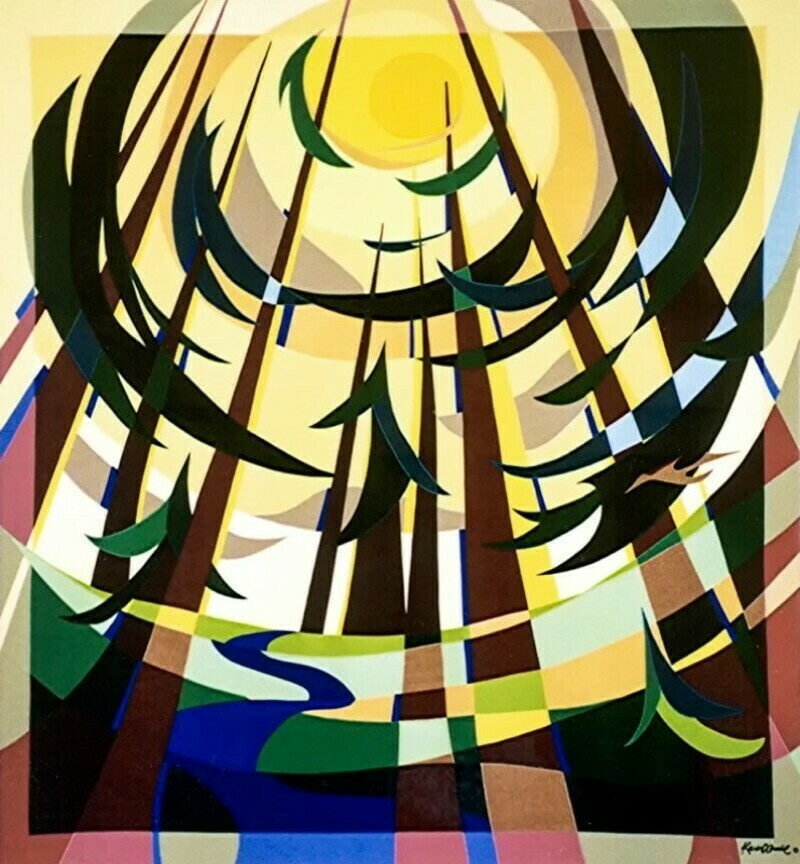
As we begin, I’ll invite you to take a deep breath. There are some things in life so essential, so constant, that we barely notice them until they are missing. Air is one of those things. We rarely think about breathing. We simply do it. Every moment of every day, breath fills our lungs and sustains our bodies. Without it, life cannot continue. And yet scripture repeatedly tells us that the Spirit of God is like breath…unseen, powerful, life-giving, sustaining. On this Pentecost Sunday, perhaps that is one of the most important questions we can ask ourselves: Are we breathing deeply of the Spirit of God? The Spirit surrounds us, moves among us, and fills creation with life. But are we open to it? Are we aware of it? Are we allowing God’s Spirit to guide, strengthen, and encourage us through the joys and challenges of life?
The Hebrew word for spirit is ruach. It can equally mean breath or wind. In the Greek New Testament, the word pneuma carries the same meaning. Breath. Wind. Spirit. Throughout scripture, God’s Spirit moves like wind across chaos at creation, breathes life into dry bones through Ezekiel, and descends like rushing wind at Pentecost. Breath is life. Spirit is life. And without that Spirit, we slowly become spiritually breathless. Many of us today are spiritually out of breath. Life has a way of doing that to us. Responsibilities pile up. Worries accumulate. Grief lingers. News cycles exhaust us. Relationships become strained. Churches wonder about the future. People carry silent burdens that no one else sees. Some are exhausted physically. Others emotionally. Others spiritually. We can find ourselves merely surviving instead of truly living.
That is why this day is SO important. Pentecost matters. Pentecost reminds us that God does not abandon weary people. God breathes new life into tired hearts. The Holy Spirit comes not only for dramatic mountaintop experiences, but also for ordinary people trying to navigate ordinary life. The Spirit strengthens us when we feel weak. The Spirit guides us when we feel uncertain. The Spirit encourages us when hope grows thin. In the reading from Acts, we encounter the apostle Paul on one of his missionary journeys. What is striking about this passage is how often the Spirit redirects him. Paul and his companions try to go one direction, but the Spirit prevents it. They attempt another route, but again the way closes. Finally, Paul receives a vision calling him toward Macedonia. The journey unfolds not according to Paul’s careful planning, but according to the leading of the Spirit.
That sounds familiar, doesn’t it? Most of us like clarity. We like plans. We like certainty. Yet life rarely unfolds exactly as expected. Careers shift. Families change. Health declines. Opportunities appear unexpectedly. Doors open and others close. Churches evolve. Entire communities transform around us. We often wish God would simply hand us a roadmap for the next ten years. Instead, the Spirit usually guides us one breath at a time. Yet, sometimes the Spirit says “go.” And sometimes the Spirit says “wait.” Sometimes the Spirit says “not yet.” And sometimes the Spirit gently leads us toward possibilities we never imagined for ourselves. The difficult part for all of us is learning how to listen. We are surrounded by noise. Notifications buzz. Opinions compete for attention. Fear shouts loudly. Anxiety fills the airwaves. It becomes difficult to discern the quiet movement of the Spirit. Yet throughout Christian history, believers have discovered that the Spirit often speaks most clearly in moments of prayer, stillness, worship, service, and community. The Spirit rarely bullies or forces. The Spirit invites. Nudges. Encourages.
The United Church of Canada speaks about three important pillars shaping its vision for the future: Bold Discipleship, Deep Spirituality, and Daring Justice. Those are beautiful aspirations. But none of them are possible without the Holy Spirit. Bold discipleship is not simply human determination or church busyness. It is Spirit-filled courage. The disciples themselves are proof of this. Before Pentecost, they were fearful, uncertain, hiding behind locked doors. After Pentecost, filled with the Spirit, they found courage to love, serve, preach, and build communities of hope. The Spirit transformed ordinary people into bold disciples. Pentecost is still happening today. Every act of compassion, every difficult forgiveness, every step of faith, every decision to keep loving in a hurting world. These are signs of the Spirit at work within us. Sometimes people think bold discipleship means having all the answers or possessing unshakable certainty. But often bold discipleship simply means trusting God enough to take the next faithful step.
Deep spirituality also depends on the Spirit. Deep spirituality is not about appearing religious or having perfect faith. Deep spirituality is about cultivating awareness of God’s presence in everyday life. It is learning to breathe deeply of God’s grace. Prayer becomes less about reciting the right words and more about opening ourselves to the presence of God. Worship becomes more than routine; it becomes encounter. Scripture becomes more than information; it becomes living wisdom. And perhaps now more than ever, people hunger for that depth. Our world offers endless distraction but very little peace. Endless connection but profound loneliness. Endless information but very little wisdom. The Spirit invites us beneath the surface into deeper waters — where identity is rooted not in achievement or status, but in being beloved children of God.
And then there is daring leadership. Leadership in the church today requires courage. We live in changing times. Congregations face uncertainty. Communities evolve. Old assumptions no longer hold. Yet throughout scripture, the Spirit repeatedly empowers people for courageous leadership precisely during seasons of change. Moses did not feel ready. Esther did not feel ready. Mary did not feel ready. Paul certainly faced moments of fear and uncertainty. Yet the Spirit equipped them for what lay ahead. Daring leadership is not about arrogance or control. It is about openness to where God may be leading next. It is about trusting that even when the future feels unclear, the Spirit is still active. The church does not move forward merely by strategy or committees or buildings. The church moves forward by the breath of God.
And this, of course, is not only true for churches. The Spirit guides our personal lives as well.
The Spirit guides parents trying to raise children with love and wisdom in a complicated world. The Spirit guides people navigating grief after losing someone dear. The Spirit guides workers facing difficult decisions in their professions. The Spirit guides students wondering who they are becoming. The Spirit guides retirees discerning new purpose. The Spirit strengthens caregivers who feel exhausted. The Spirit encourages those wrestling with depression, loneliness, or fear.
Sometimes the guidance is dramatic. But more often it is quiet and steady…like breath itself. Think about breathing for a moment. Breath sustains us continuously, even when we are not paying attention. Yet when anxiety rises, our breathing changes. We take shallow breaths. We tense up. We forget how to breathe deeply. Spiritually, the same thing happens. Fear narrows our souls. Worry constricts our hearts. Exhaustion leaves us spiritually gasping for air. Pentecost invites us to breathe again. To pause. To become aware that God is nearer than we imagine. To remember that we do not carry life alone.
And so today we celebrate not only what happened long ago in Jerusalem, but what continues to happen now. The Spirit still moves. The Spirit still renews. The Spirit still calls. The Spirit still comforts. The Spirit still breathes life into weary souls and weary churches. The question is not whether the Spirit is present. The question is whether we are breathing deeply enough to notice. Perhaps this Pentecost Sunday is an invitation to inhale again. To breathe in grace instead of fear. Hope instead of despair. Courage instead of anxiety. Compassion instead of bitterness. To trust that God’s Spirit is still active in our lives even when we cannot fully see the path ahead.
For the Spirit of God is not distant. The Spirit is the air we breathe.
Thanks be to God.
Amen.