
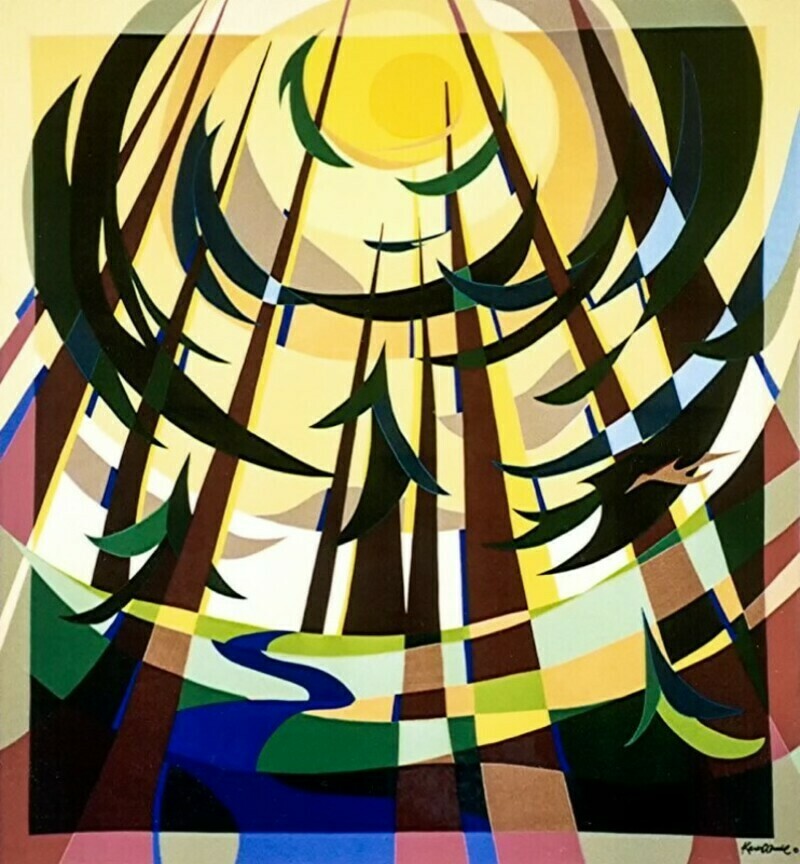
Hikers and explorers teach us that: "The view changes when you change your vantage point." And for all who seek to grow in wisdom, we soon learn that this teaching applies to most aspects of life as well. Sometimes all it takes is moving a few steps to the left or right to see something that has been hidden from view. Sometimes it requires getting up a little higher, climbing a mountain, listening to a story. Sometimes it takes years of growth, learning, and humility before we can see what was always there. The view changes when you change your vantage point.
Today, as we continue this series exploring the values that have shaped Northwood over the past decade and beyond, we turn to the theme: "A Community of…Reconciliation." In previous weeks, we have celebrated our commitment to welcome and (just last week) to diversity. What do we do when communities have been systematically harmed? What do we do when systems of injustice have wounded people for generations? What do we do when we discover that some of the assumptions we once held were incomplete, or even wrong? The Christian response to these questions is…reconciliation.
Reconciliation is one of the most powerful and (also) one of the most challenging words in our faith. Reconciliation is more than simply getting along. Reconciliation is more than being polite. Reconciliation is more than agreeing to disagree. It is the work of restoring relationships that have been broken; of healing wounds, addressing harms, rebuilding trust, and creating a future where people can once again live together in dignity and respect. Reconciliation is at the very heart of the Gospel because it reflects God's desire to reconcile all things to Godself.
This theme is beautifully illustrated in our Gospel reading through the story of Zacchaeus. Many of us remember him in Sunday school as the "wee little man" from childhood songs, but Luke's account presents a far more profound story. Zacchaeus was a chief tax collector. He had become wealthy through a system that benefited from the exploitation of others. He was part of a structure that enriched some while burdening many. As a result, he was deeply alienated from his community. People knew who he was, but they certainly did not admire him. He was wealthy, yet isolated. Powerful, yet disconnected. When Jesus comes through Jericho, Zacchaeus desperately wants to see him. Unable to see over the crowd, he climbs a sycamore tree. The tree is a symbol of Zaccheus gaining a new vantage point. By climbing higher, Zacchaeus literally sees differently. From that elevated position, perhaps he not only sees Jesus. Perhaps he also begins to see: himself more clearly; he sees the exploited people not as sources of income, but as neighbours. He begins to see the consequences of the system in which he has profited and participated. Whatever happens in that tree, something changes. When Jesus calls him down and chooses to stay at his home, Zacchaeus responds with extraordinary generosity. He pledges to give half of his possessions to the poor and repay four times anything he has gained through fraud. We firstly notice that reconciliation involves more than feeling sorry. Zacchaeus does not merely offer an apology. He takes concrete action to repair harm. He seeks restoration. That is reconciliation in the biblical sense. It requires honesty, accountability, and a willingness to help mend that which has been broken.
The same principle appears in our reading from Isaiah. The people are faithfully participating in religious practices. They are fasting, praying, and engaging in acts of worship. Yet God challenges them through the prophet. God asks whether their religious observances mean anything if they continue to ignore injustice. True worship, Isaiah declares, is not merely ritual. It is loosening the bonds of injustice; feeding the hungry; welcoming the homeless; caring for the vulnerable; repairing what has been broken within society. Then comes one of the most beautiful descriptions of God's people living reconciliation: "You shall be called the repairer of the breach, the restorer of streets to live in." God's people are called to be bridge-builders, healers, restorers, and reconcilers.
Over the past decade, reconciliation has become a defining value of our congregation. Much of this work has been expressed through our relationship with Indigenous peoples and communities. As Canadians, we have increasingly come to understand the devastating legacy of residential schools and the ways Indigenous cultures, languages, and traditions were systematically harmed. Sadly, we know that the church was not merely a bystander in that history. Churches, including the United Church of Canada, participated in systems that caused profound harm. The journey toward reconciliation requires the courage to tell the truth. It requires the humility to acknowledge mistakes. It requires listening to voices that were too often ignored. In 1986, the United Church offered an apology to Indigenous peoples. Then, in 1998, it offered what became known as the Historic Apology, recognizing not only specific actions but also the cultural arrogance that assumed European ways were superior to Indigenous ways. Those apologies were important milestones, but reconciliation does not end with an apology. In many ways, it begins there.
At Northwood, we have sought to participate in that journey. We have worked to deepen our understanding of the lands on which we gather, incorporating meaningful land acknowledgements into all of our gatherings. We have installed signage that reminds us of our commitments and educates those who enter our building. Continuing from this, we have built relationships with Indigenous neighbours and organizations. One expression of this commitment has been our relationship with the Surrey-Delta Métis Society who share this building. This has flowed into Metis fellowship gatherings, beading and jigging gatherings, and the now annual Truth and Reconciliation event in September. What began as a response to a national call has become part of our congregational identity as we gather to learn, remember, listen, and reflect. And as we move forward, we are reminded that reconciliation is not something we complete. It is something we practice as we continue listening, learning, and growing.
This theme of reconciliation also extends to another important area of our life together: our relationship with the 2SLGBTQIA+ community. For much of modern history, this community has experienced exclusion, discrimination, and rejection. The pain of that exclusion was often intensified by religious communities. Many faithful people were told there was no place for them in the church. Their gifts were overlooked; relationships questioned; identities misunderstood. Part of that history included the fact that homosexuality was once classified by the medical profession as a mental disorder in the Diagnostic and Statistical Manual of Mental Disorders. What many now recognize as a beautiful and natural expression of human diversity was viewed through lenses of fear, misunderstanding, and inadequate knowledge. Over time, however, society gained a better vantage point. Through research, experience, personal stories, and deeper understanding, old assumptions were challenged. People began to see what had always been true: that LGBTQIA+ persons are beloved children of God, possessing the same dignity, worth, gifts, and capacity for love as anyone else.
The United Church has been part of that journey of learning and growth. Decades ago, it chose to affirm that 2SLGBTQIA+ people are welcome in every aspect of church life, including leadership and ordained ministry in 1988. That journey was not always easy. It involved difficult conversations, disagreements, and change. Yet it was ultimately rooted in a desire to see more clearly the breadth of God's love and the fullness of God's creation. As a congregation, Northwood has sought to embody that very spirit of welcome and affirmation. Yet even here, reconciliation remains ongoing. We continue to learn. We continue to listen. We continue to seek ways to ensure that all people know they are valued, respected, and loved. Reconciliation is not a destination that we reach and then leave behind. It is a way of being in relationship.
What strikes me is that both Indigenous reconciliation and 2SLGBTQIA+ inclusion share something important with the story of Zacchaeus. In each case, we are invited to climb higher and see differently. In each case, old assumptions are challenged. In each case, individuals and communities are asked to listen to stories they had not previously understood. In each case, reconciliation began when people gain a new vantage point. That may be one of the most important spiritual practices for our time: learning to see from another person's vantage point. We will never grow by remaining where we are. We grow when we listen; when we learn; when we allow God to expand our vision. We grow when we discover that our understanding was incomplete and that God's truth is often larger than we imagined. We grow when we change our vantage point and begin to take in a larger view!
As we reflect on Northwood's journey over the past decade, there is much for which we can give thanks. We have sought to become a community of welcome…a community of diversity. And we have sought to become a community of reconciliation. Yet the work is not finished for reconciliation never truly ends. There will always be new stories to hear, new relationships to build, new injustices to address, and new perspectives to consider. The invitation of the Gospel is not to arrive at perfection but to remain open to transformation. Zacchaeus was given the opportunity to gain a better vantage point, and he saw anew and was changed forever! I am excited in the near future to meet a new member of Northwood whose name is “vantage”. Betty Nobel will be returning to church very soon with Vantage, her new seeing eye dog. Vantage will enhance her vision! As followers of Christ, we are invited to a bigger vantage point…to climb the tree… to gain a better view…to see the world as Christ sees it. May we continue to humbly and lovingly be ‘repairers of the breach’, restorers of community, bearers of God's grace as we further build a community of reconciliation.
Amen.