
My, my…you look different today. I look different; you look different. We are changing individuals! We are not the same collection of cells that we were even last week…we inhabit these amazing changing bodies. You likely have heard the idea that your body “completely regenerates every 7 years”. I looked into that, and there is some truth and some fiction to it. Parts of our body are changing rapidly. For example, our wonderful skin cells renew every 2–4 weeks. Our bone cells remodel; however, every decade. So, we are changing…some parts faster than others. But here is an interesting piece that I learned. Our brain neurons usually last for a lifetime. So, for those of us who don’t immediately embrace the topic of change, it is understandable. Because while parts of us are rapidly changing; however, there are other parts that are not.
And whether we embrace change or not, it will always be one of the most difficult realities we face in life. Not because we do not understand it, but because it asks something of us. Change asks us to loosen our grip, to release what is familiar, and to step into something not yet fully known. It requires faith. If we are honest, most of us would prefer clarity over change, certainty over transformation. And naturally, we want to know where we are going. We like to feel steady ground beneath our feet. And yet, the story of faith reminds us, again and again, that God is always doing something new. God is doing new things often in ways we do not expect…understand…or feel ready for.
In the book of Acts, we encounter Peter in one of those unsettling, transformative moments. Peter has experienced something that reshapes his understanding of who belongs to God’s family, and how God’s grace works. Through a vision and a series of encounters, Peter comes to see that God’s Spirit is moving beyond the boundaries he once believed were fixed. The grace of God is not contained or restricted; it reaches beyond what he thought possible. When Peter returns to the community, he is questioned. People, understandably, are unsettled. They want to know why he crossed those lines, why he sat at table with those he was never meant to include, why he allowed his understanding of God to change. Because change in matters of faith is rarely easy for a community; it touches identity, tradition, and our sense of what is right and true.
So Peter tells the story of his vision. He does not argue from theory; he shares how God spoke to him. “The Spirit told me,” he says. “God gave them the same gift.” And then comes this remarkable moment of humility: “Who was I that I could hinder God?” That question changes everything. It shifts the focus from control to discernment, from protecting boundaries to noticing where God is already at work. And it leaves us with a question that still echoes today: Where is God expanding the circle?
Because that is what God does. God does not stay still; God does not move inward; God moves out…God includes…God surprises. Often, God works just beyond the edges of our comfort. This is where our reading from the Gospel of John meets us so powerfully. In a quiet, intimate moment, Jesus gives his disciples a commandment that will define everything that follows: “Love one another. Just as I have loved you, you also should love one another.” It sounds simple, even familiar, but it is anything but easy. The love Jesus speaks of is not cautious or contained. It is expansive. It crosses boundaries and reaches toward those we might not expect. It is the kind of love that reshapes communities and redefines belonging. And then Jesus says something striking: “By this everyone will know that you are my disciples, if you have love for one another.” Not by certainty, not by structure, not by holding tightly to what has always been, but by love.
These two readings, paired together, reveal something essential: the life of faith is always moving outward, always widening, always calling us into deeper love. And that brings us to this moment, right here and now. For today is far from just another Sunday. It is a day of transition, of tenderness, and of hope. Today we begin to welcome members of Bethany-Newton United Church into this community of faith. We do so with full hearts, knowing that this moment carries both grief and grace, because whenever something ends, something else begins, and that space in between is never simple.
To those coming from Bethany-Newton, we want you to know that we see you and honour the story you carry. The years of ministry, the relationships, the memories, the faith that was nurtured in that place. These things are not lost; they are carried into this new chapter and into the life of this community. And to Northwood, we are invited into something sacred: not simply receiving new members, but expanding the circle of who we are, becoming something new together, learning new stories, and making space for new relationships. This is not just addition; it is transformation. If I could share my vision, I am envisioning conversation circles in the weeks ahead where we can hear one another’s stories. It would be an honour to hear the stories of Bethany-Newton and for us to share parts of Northwood. I have a vision of the sharing of our journeys and honour the gift we can be to another.
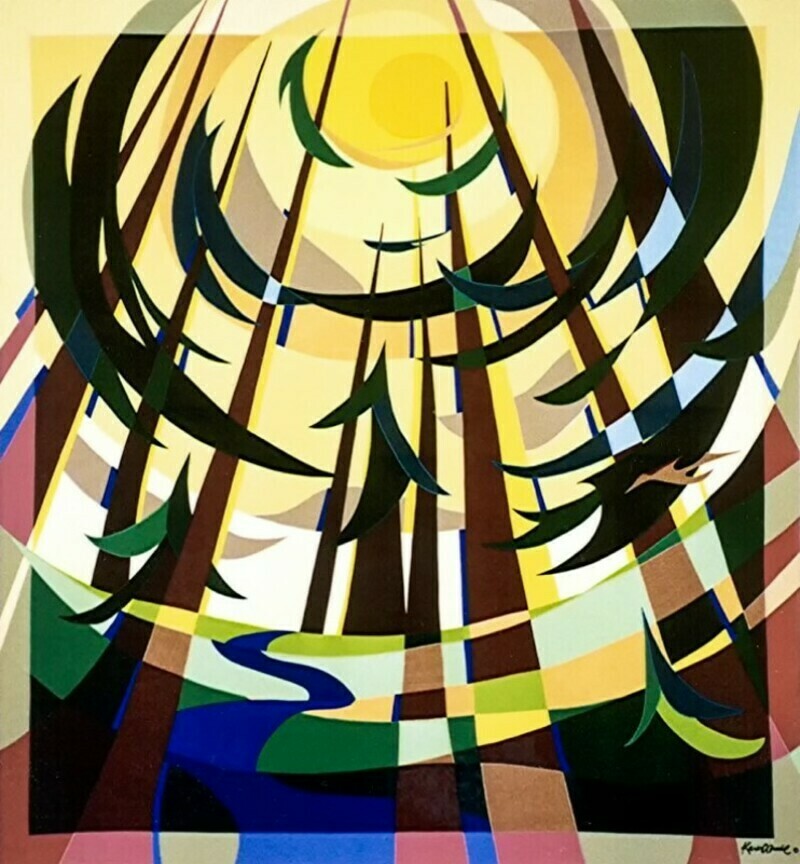
And this is why today we will plant a tree. A tree is one of the most powerful symbols of faith we have. The tree speaks of roots that go deep into the soil, drawing nourishment from what has come before. It speaks of growth that is slow, steady, and often unseen, yet always reaching toward the light. It speaks of seasons—times of fullness and times of loss, times of change and renewal. And it speaks of the future…of shade not yet enjoyed, of fruit not yet borne, of life that will continue beyond us. Planting a tree today is not just a gesture; it is a declaration that life continues, that faith endures, and that something new is being planted among us. Like all things of God, it will take time, care, and patience. And that is why we have a beautiful houseplant for each of our new members from Bethany-Newton for you to take home. A symbol of the new life, growth and beauty that YOU are!
Perhaps that is what the courage to change really looks like. Not dramatic gestures, but faithful planting; not instant results, but steady trust; not certainty, but hope. This is the spirit behind the Toward 2035 vision within the United Church of Canada, which reminds us that the future church may look different: perhaps smaller, perhaps less certain in form…but also holding the potential to be deeper, more connected, and more rooted in love. It invites us to ask: Where is God expanding the circle today?
And I get it…this is HARD! If we are honest, the question of God’s expanding the circle can feel unsettling because it may lead us beyond what we know. And it will stretch us in new ways. Isn’t it fascinating how our body parts continue to grow; however, our brain does not? This is a challenge before us. However, it is a challenge that leads us to new life. Every time the circle widens, love grows. Every time we welcome another, Christ is revealed. Every time we step beyond fear, faith deepens. That is why we gather at the table for Holy Communion today, because the table is where all of this becomes visible. It is where Jesus’ commandment to love another takes shape. It is where differences are held in unity. It is where there is always enough. And it is where we remember that we are not separate, but one body.
The table is not ours to control; it is Christ’s table, and Christ is always inviting more, always widening the circle, always making room. Just as Peter learned, just as the early church discovered, just as we are being invited to live. So today, as we welcome new members, as we plant a tree, and as we gather at the table, we are not just marking events; we are participating in God’s unfolding work, a work that is bigger than us, still growing, and calling us forward.
So may we have the courage to change, the courage to listen for where God is leading, the courage to release what no longer gives life, the courage to welcome what is new, and the courage to love more deeply than we thought possible. As we step into this next chapter together, may we trust that the same Spirit who guided Peter, who shaped the early church, and who raised Christ from the dead is alive among us now—leading us, growing us, and calling us into a future filled with hope. And in that hope, we can say with confidence and faith: thanks be to God.
Amen.